2025 Forum on Financial Services for Low-Altitude Economy Successfully Concluded: Industry-Finance Collaboration Paints New Blueprint for Low-Altitude Economy
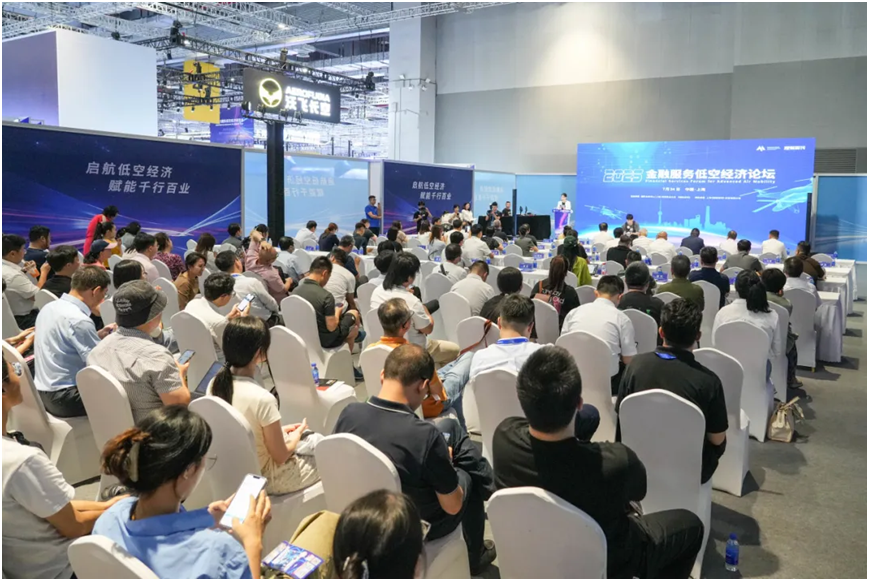
On July 24, 2025, the "2025 Financial Services Forum for Low-Altitude Economy" was successfully convened at the National Exhibition and Convention Center (Shanghai). As a key component of the "2025 International Low-Altitude Economy Expo," the forum was hosted by the National Exhibition and Convention Center (Shanghai) Co., Ltd. and ‘MoneyWeekly’, co-organized by the Special Committee for FinTech Services, the Special Committee for Low-Altitude Economy Services, and the Special Committee for Logistics and Supply Chain Services under the Shanghai Federation of Modern Service Industries, and undertaken by Shanghai ‘MoneyWeekly’ Media Co., Ltd., with support from the AI Leadership Club.The forum brought together government officials, representatives from financial institutions, leaders of low-altitude economy enterprises, experts, scholars, and distinguished guests from various sectors. Participants engaged in in-depth discussions on the new opportunities arising from the integration of finance and the low-altitude economy, aiming to jointly build a new ecosystem for industry-finance collaboration.
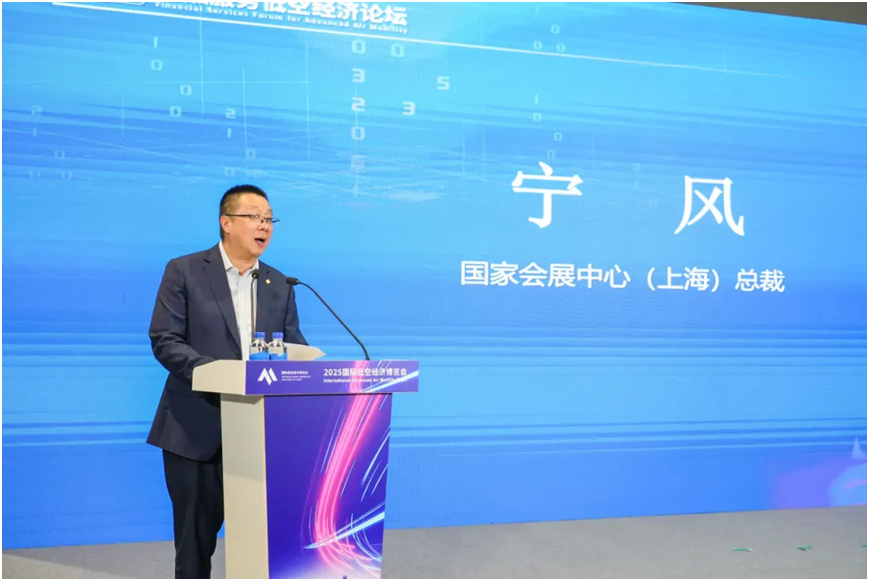
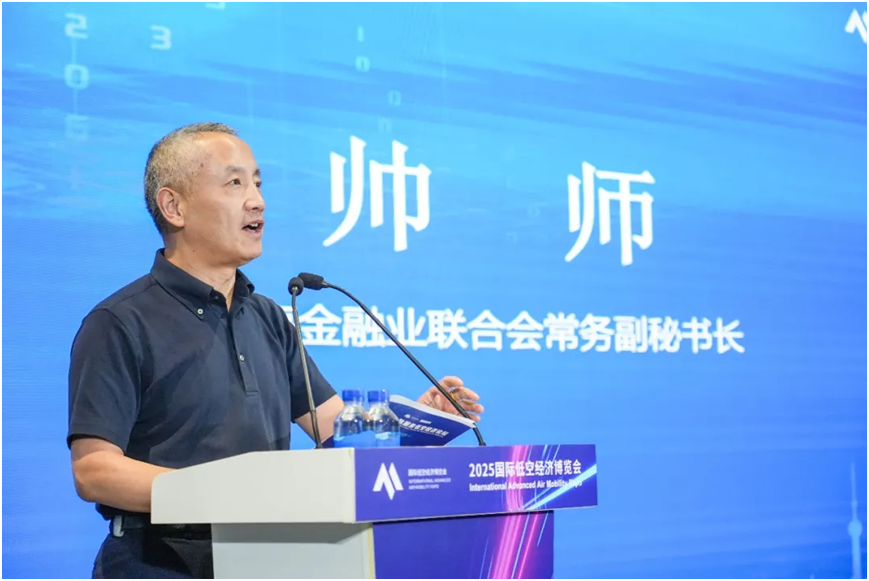
Distinguished guests attending the forum included: Ma Hong, Vice President of the Shanghai Federation of Modern Service Industries and Director of its Special Committee for Financial Technology Services; Zhu Zhoulong, Vice President of the Shanghai Federation of Modern Service Industries and Director of its Special Committee for Low-Altitude Economy Services, former Deputy Director of the East China Regional Administration of the Civil Aviation Administration of China; You Shen, Vice President of the Shanghai Federation of Modern Service Industries and Director of its Special Committee for Logistics and Supply Chain Services; Fan Hongxi, Honorary Director of the Special Committee for Low-Altitude Economy Services of the Shanghai Federation of Modern Service Industries and former President of Shanghai Airlines; Shuai Shi, Deputy Secretary-General of the Shanghai Financial Industry Federation; Ning Feng, President of the National Exhibition and Convention Center (Shanghai); Chen Yue, Supervisor of the Shanghai Federation of Modern Service Industries and Chairman of ‘MoneyWeekly’ Media, among others. The forum commenced with opening addresses delivered successively by Ning Feng, President of the National Exhibition and Convention Center (Shanghai), and Shuai Shi, Deputy Secretary-General of the Shanghai Financial Industry Federation.
Financial institutions are injecting "vitality" into the low-altitude economy through multi-dimensional support.
As a national strategic emerging industry, the low-altitude economy features a long industrial chain and technology-intensive characteristics, leading to increasingly prominent demands for diversified, specialized, and scenario-based financial services. During the forum, representatives from financial institutions such as Bank of China Financial Leasing Co., Ltd. and PICC Property and Casualty Company Limited Shanghai Branch shared innovative practices in empowering the low-altitude economy. From financial leasing and industrial investment to risk protection and capital operations, a comprehensive lifecycle financial service system has been established.
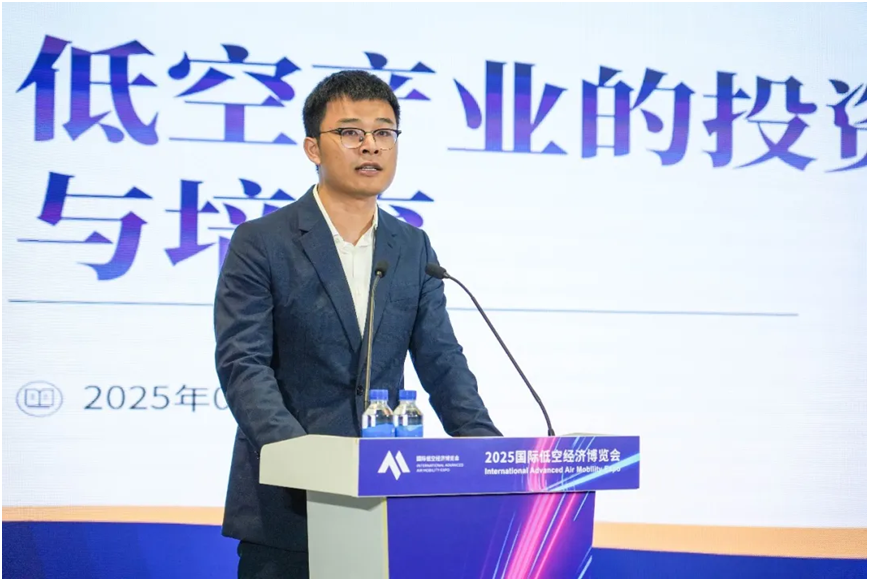
▲Zhao Hailan, Deputy General Manager of Shanghai Airport Investment Co., Ltd. and Chairman of Shanghai Airport Hongyu Fund
In her speech, Zhao Hailan, Deputy General Manager of Shanghai Airport Investment Co., Ltd. and Chairman of Shanghai Airport Hongyu Fund, noted that Hongyu Capital, leveraging Shanghai Low-Altitude Economy Industrial Development Co., Ltd., plans to launch a low-altitude industry fund with a scale of RMB 1–1.5 billion, focusing on areas such as low-altitude communication and sensing. Adopting an "equity investment + resource synergy" model, the fund will provide tailored support based on the development stage of enterprises, offering financial backing, airport resources, and other assistance to build a full-process closed-loop system. In the future, the fund will continue to empower the sector through capital, promote technological commercialization, and contribute to improving the low-altitude economy ecosystem.
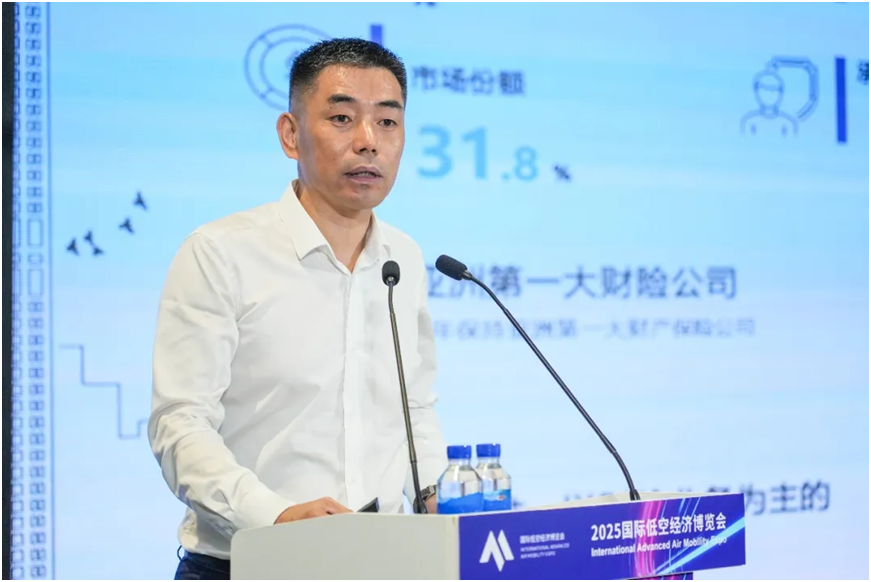
▲ Gao Xiaodong, Head of Institutional Business Department at PICC Property and Casualty Shanghai Branch
Gao Xiaodong, Head of the Institutional Business Department at PICC Property and Casualty Shanghai Branch, shared innovative practices on "Insurance Safeguarding the Development of the Low-Altitude Economy." He explained that PICC actively identifies emerging demands and pathways in the insurance sector under the risk scenarios of the low-altitude economy. Leveraging industrial support policies and the company’s strengths in insurance innovation, PICC has developed "Kong Lian Bao," an industrial chain insurance solution covering the entire upstream and downstream of the low-altitude economy. Additionally, "Low-Altitude Weather Bao" combines AI modeling with real-time meteorological data to provide rapid risk warnings for eVTOL aircraft, logistics drones, and various industrial and consumer drones. Notably, China’s first "Low-Altitude Aircraft Exclusive Insurance" provides risk protection for the EH-216S unmanned passenger aircraft, addressing the challenge of specialized insurance for the low-altitude economy.
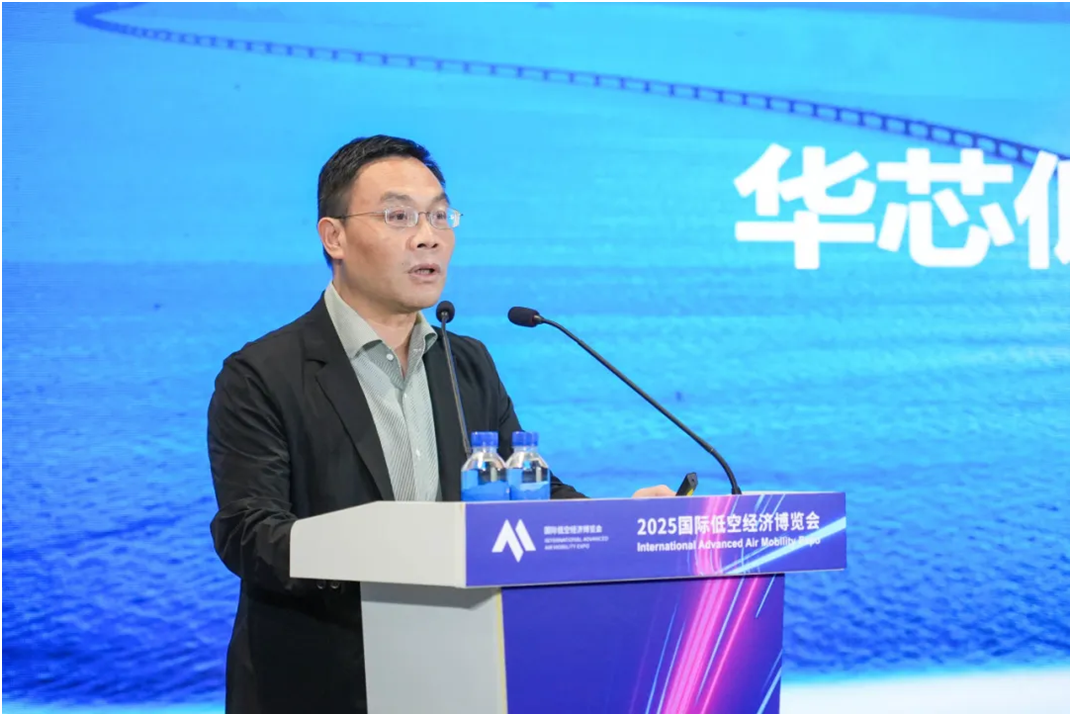
▲ Pan Yangwen, Managing Director of Huaxin International Investment Co., Ltd.
Pan Yangwen, Managing Director of Huaxin International Investment Co., Ltd., focused on the investment, financing, and capital operation pathways for low-altitude economy enterprises. He explained that Huaxin International is actively expanding its presence in the low-altitude economy sector by investing in and constructing four major bases: aviation materials trade, drone research and development, aircraft manufacturing, and others. The company has also attracted enterprises such as JD Technology to form an industrial closed-loop ecosystem. In collaboration with government funds for new quality productive forces, Huaxin International has innovated a parent-child fund structure and established a dual-assessment model integrating technical and airworthiness evaluations to screen projects. Moving forward, the company will promote stage-appropriate financing, optimize exit pathways, deepen government-enterprise collaboration, and support the development of the low-altitude economy through innovative investment and financing mechanisms.
Industrial Practices Push Through Breakthroughs as Technology and Scenario Integration Yield Tangible Results.
With the release of policy dividends and breakthroughs in technological innovation, the low-altitude economy is transitioning from "concept" to "practice," gaining momentum across sectors such as logistics, tourism, and emergency rescue. At the forum, multiple low-altitude economy enterprises shared their achievements and challenges in commercial implementation, showcasing the vitality of industrial development.
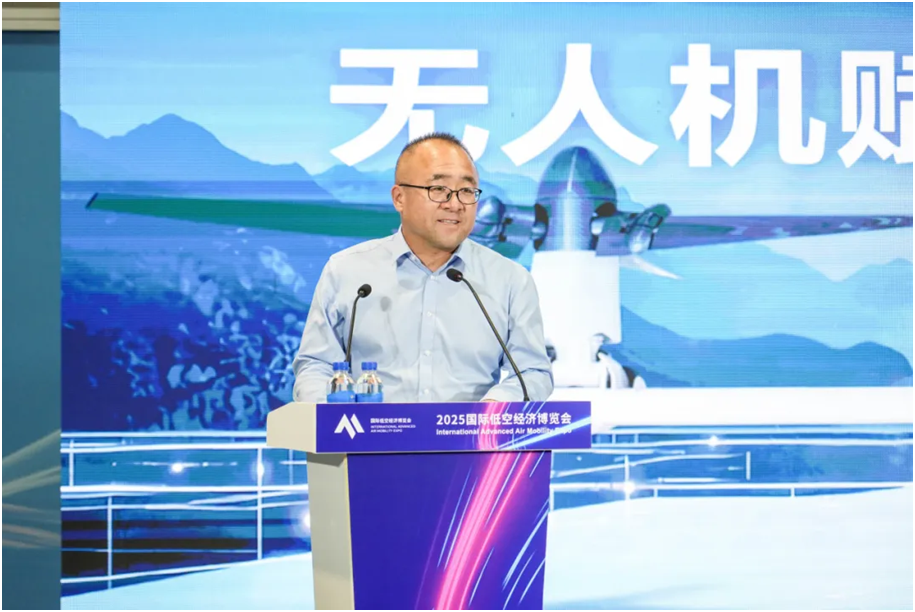
▲ Sun Liye, Vice President of United Aircraft Group
Sun Liye, Vice President of United Aircraft Group, delivered a presentation titled "Commercial Practices in the Low-Altitude Economy: Empowering Industrial Upgrading," highlighting the company's breakthroughs in drone logistics and low-altitude inspection. He noted that United Aircraft has established drone delivery networks in multiple cities, playing a significant role in scenarios such as medical supply transportation, low-altitude logistics, and firefighting emergency response. Furthermore, he shared insights and recommendations from three perspectives: "manufacturing" aircraft, "developing" infrastructure, and "promoting" application scenarios.
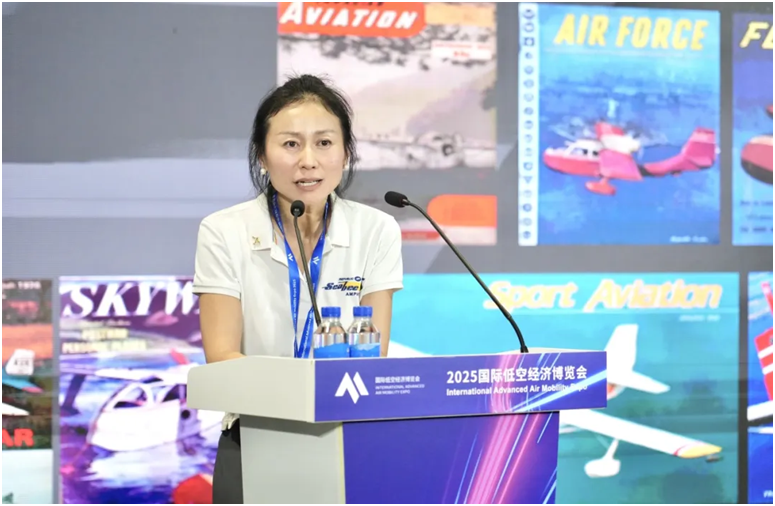
▲ Chen Yan, Director of Sky Industries USA Inc.
Chen Yan, Director of Sky Industries USA Inc., introduced the innovative application of amphibious aircraft in the low-altitude economy. At this expo, the company debuted the RC-3 Seabee amphibious aircraft, which demonstrates unique value in scenarios such as island transportation, emergency rescue, and tourism due to its capability to "operate without dedicated runways, utilizing rivers, lakes, and bays for takeoff and landing." Additionally, she emphasized the need to accelerate the development of a "water aerodrome" network, promote the construction of an integrated land-water low-altitude transportation system, and advance the high-quality development of the low-altitude economy.
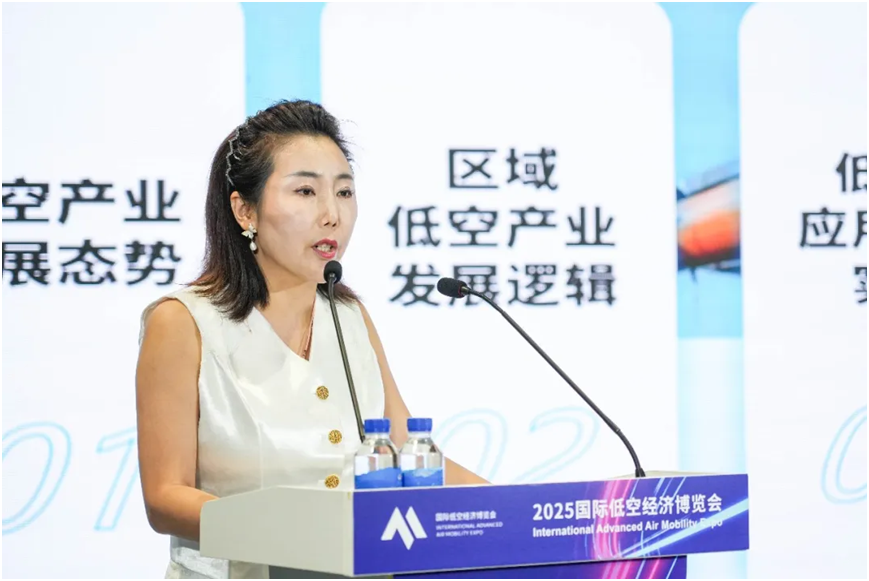
▲ He Yan, Chairman of Duoyan Flying Eagle (Linfen) Low-Altitude Economic Development Co., Ltd.
He Yan, Chairman of Duoyan Flying Eagle (Linfen) Low-Altitude Economic Development Co., Ltd., shared the "Linfen Model" for regional development of the low-altitude economy. By focusing on "ecosystem building, scenario expansion, and industrial clustering," Linfen has implemented over 20 application scenarios in areas such as rural logistics, low-altitude tourism, and emergency rescue. Among these, the "Village-to-Village Logistics" project covers 3 towns and 5 townships, reducing distribution costs to 1.4 RMB per kilometer.
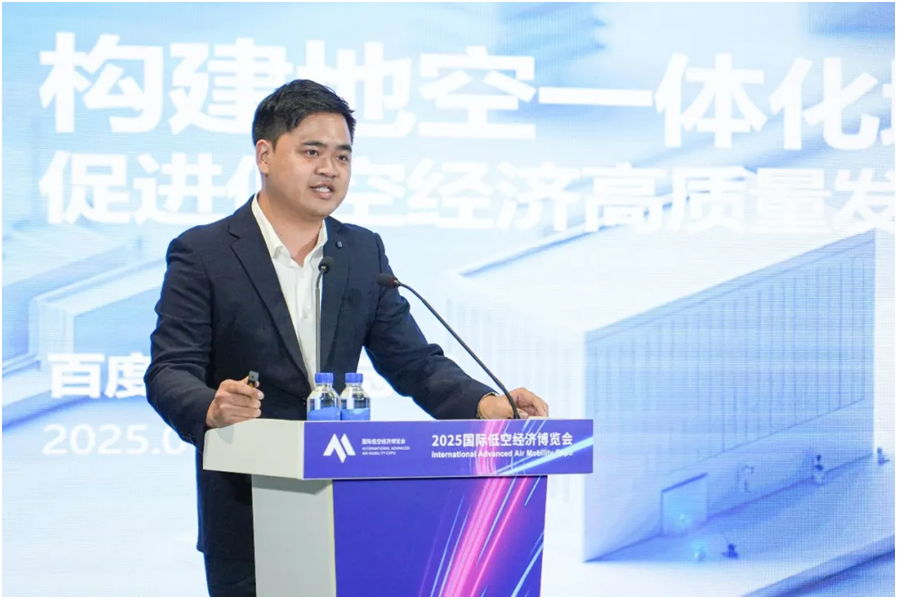
▲ Gao Zhicheng, Director of Low-Altitude Solutions at Baidu
Gao Zhicheng, Director of Low-Altitude Solutions at Baidu, introduced the practical implementation of Baidu's air-ground integrated intelligent foundational platform "DuEarth." This platform utilizes a 3D twin map engine to integrate airspace data, traffic information, meteorological data, and more, providing services such as precise navigation, airspace planning, and conflict warnings for low-altitude aircraft.
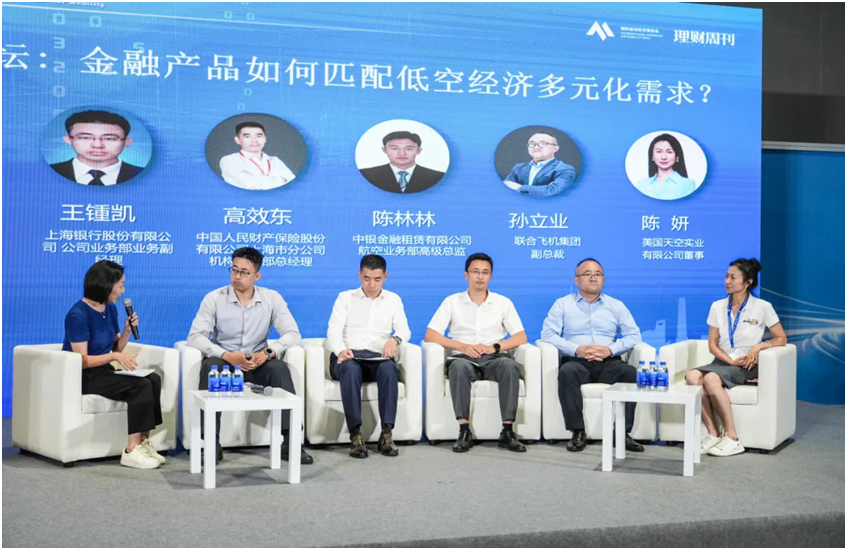
In the concluding roundtable discussion titled "How Financial Products Can Meet the Diversified Needs of the Low-Altitude Economy," representatives from institutions such as Bank of Shanghai, PICC Property and Casualty, Bank of China Financial Leasing, United Aircraft Group, and Sky Industries USA engaged in in-depth discussions on areas including low-altitude economy credit, risk protection, aircraft financing and leasing, and cross-border financial services. Participants generally agreed that the characteristics of low-altitude economy enterprises—being "asset-light, R&D-intensive, and long-cycle"—create a gap in compatibility with traditional financial products, necessitating an innovative evaluation system. However, financial innovation cannot be developed in isolation; it requires deep immersion in industrial scenarios and collaborative product design with enterprises. Industry-finance synergy is key to overcoming financing challenges in the low-altitude economy.
The successful hosting of this forum has built a bridge for deep dialogue between the financial sector and the low-altitude economy industry. Data indicates that China's low-altitude economy market size is projected to reach RMB 1.5 trillion by 2025, with the potential to exceed RMB 3.5 trillion by 2035. Shanghai is actively advancing the "Low-Altitude Economy Industrial High-Quality Development Action Plan (2024–2027)," aiming to achieve a core industrial scale of over RMB 50 billion by 2027. Against this backdrop, the deep integration of finance and industry will inject sustained momentum into the low-altitude economy.