Distinguished Guests, Dear Friends,
Good morning! It is a great
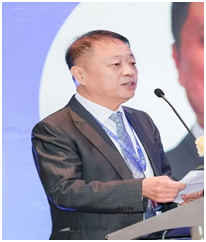
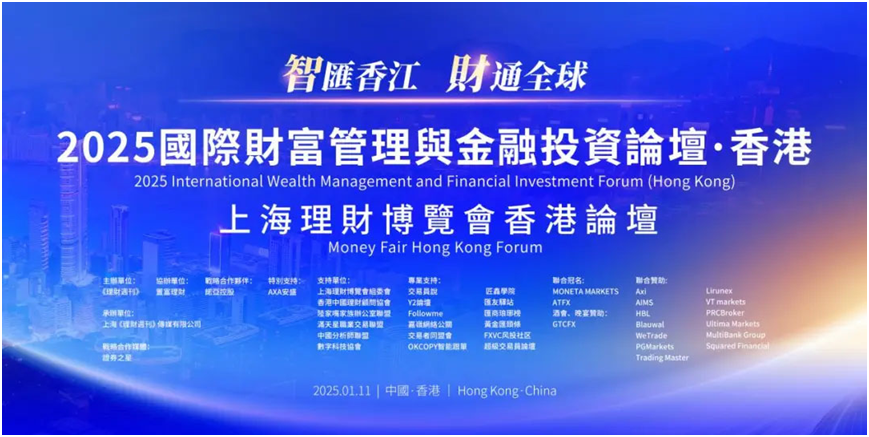
pleasure to gather with all of you by the beautiful Victoria Harbour for this grand forum today. On behalf of the organizer, MoneyWeekly, I would like to express my sincere gratitude to the co-organizers, supporting institutions, and partners of this forum, as well as to all friends who have traveled from all over the world to attend this event amid your busy schedules.
We are honored to have our long-time friend, Dr. Tao Dong, with us today to deliver a speech entitled "The Global Economy and Markets: Resetting". Coincidentally, the Chinese Character of the Year for China's Wealth Management Market 2024, selected by Money Weekly earlier this year, is “Chong”(restart).This character, with multiple related meanings, carries profound connotations: we face immense pressure, yet we must initiate a fresh start, rebuild our frameworks and strategies, and ultimately achieve renewal and revitalization.The external environment we now confront is described domestically as "changes unseen in a century", while American scholars refer to this era as the VUCA era—one of volatility, uncertainty, complexity and ambiguity. In my view, one of the defining features of this environment is the profound transformation
of globalization, which began in the 1980s.
On the one hand, the trend of deglobalization has intensified in recent years. Trade protectionism is on the rise, nationalist tendencies are
growing, populist forces are gaining ground, the authority of international governance institutions has been eroded, and economic bloc formation and geopolitical grouping have become increasingly prominent. All these factors have exerted a tremendous impact on the global economic and political landscape.
On the other hand, we are witnessing emerging trends that strengthen globalization. The first is the globalization of technology. Leading
innovations by tech giants such as Google, Microsoft, Tesla and OpenAI—especially the open-sourcing of technologies—have sparked a worldwide wave of technological adoption and given rise to new trends in the tech industry. While Chinese enterprises are committed to independent innovation, some, like Deepseek, have also begun to open-source their technologies globally. Breakthroughs in artificial intelligence, quantum computing, biomedicine, new materials and new energy will transcend national borders, reshape the human economy, daily life and society, and forge new interdependencies among nations.
Another notable trend is the wave of Chinese enterprises going global. Just as the entry of multinational corporations into the Chinese market was a hallmark of the previous wave of globalization, the overseas expansion of Chinese enterprises will be a core component of the new wave of
globalization. Going global is also a crucial strategy for Chinese enterprises to address the challenges posed by deglobalization. Their overseas expansion spans a wide range of sectors—from infrastructure and manufacturing to products, production capacity, services and technologies. The destinations of this expansion have also become increasingly diversified, with Southeast Asia, Latin America, the Middle East and Africa emerging as popular choices. This trend has driven the global allocation of human resources and capital.
Against the backdrop of the intertwined trends of deglobalization and new globalization, four key areas deserve our close attention: (1). Capital will follow the new trends of globalization—namely the globalization of technology and the global layout of Chinese enterprises—to make
investments, generating enormous investment opportunities. (2). The relationships between various currencies will undergo significant changes, leading to greater exchange rate volatility. (3). Asset forms will become more diversified and internationalized, and the demand for global asset allocation will grow steadily. (4). The importance of digital currencies is being recognized by an increasing number of people, and the functions of major digital currencies as reserve assets, payment methods and allocation assets will gradually strengthen.
All of these developments place higher demands on the international wealth management and financial investment industry. To keep pace with asset diversification, the products and tools for wealth management and financial investment will become more diverse. To adapt to digital advancement, the channels and methods of service delivery will be more efficient and convenient. To respond to the complex and volatile market,
the requirements for risk assessment and management will become more sophisticated and robust.
The transformation, innovation and development of the international wealth management and financial investment industry will foster a new ecosystem, providing more diversified and tailored services for high-net-worth individuals and investors.
In this new era, Hong Kong, as an international financial center, also faces new opportunities and challenges. Hong Kong needs to maintain its competitive advantages in banking, insurance, foreign exchange, gold and asset management; revitalize the scale and vitality of its securities market; strive to build itself into an international wealth management hub, a cluster for family offices and a digital currency trading center; and further leverage its role as a "super-connector", serving as a window and bridge for global capital to enter the Chinese market and for Chinese enterprises to expand globally.
It is against this context that we hold this forum in Hong Kong today. We are delighted to have with us a host of distinguished guests—renowned economists, authoritative figures from government and social organizations, and a great number of frontline analysts and investment
experts. Together, we will explore the evolving trends and coping strategies in international wealth management and financial investment and share valuable insights.
I am confident that today's forum will be a splendid feast of ideas, and that every participant will return with fruitful gains and a rewarding experience!