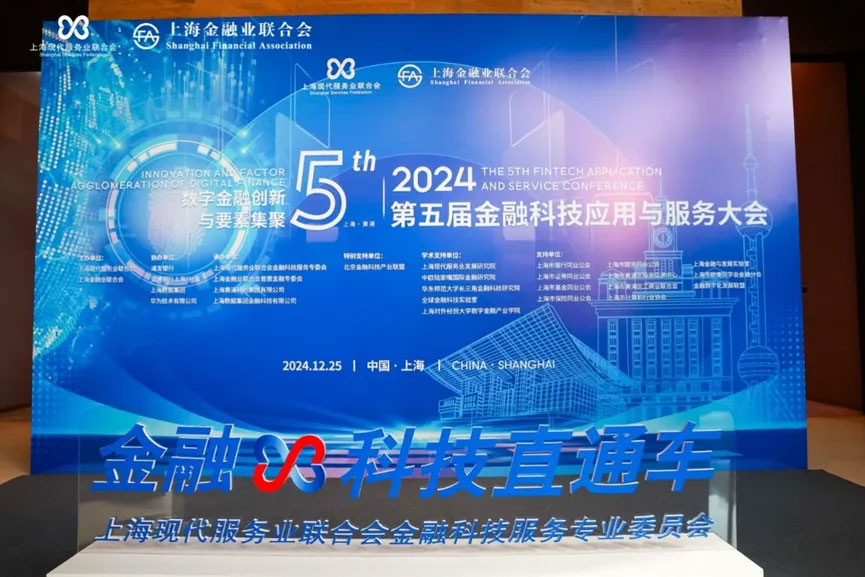
On the afternoon of December 25, 2024 The 5th Financial Technology Application and Services Conference (hereinafter referred to as "the Conference") was grandly held at the Banquet Hall on the 3rd Floor of Andaz Xintiandi Shanghai, located at No. 88 Songshan Road, Huangpu District, Shanghai.
It is reported that the theme of this conference is “Digital Financial Innovation and Factor Agglomeration”. The Conference brought together high-quality resources from various parties, including financial institutions, technology enterprises, and a wide range of application scenarios, to jointly discuss the cutting-edge trends and practices of digital finance.
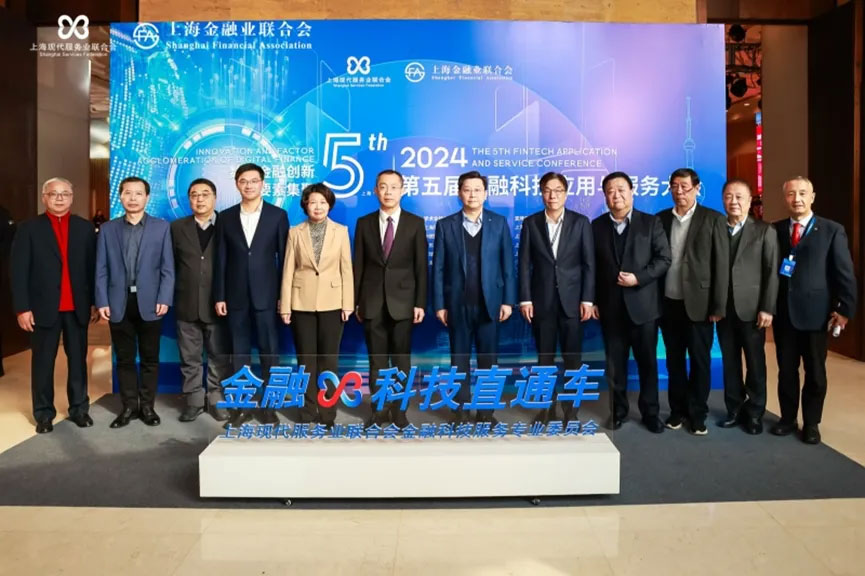
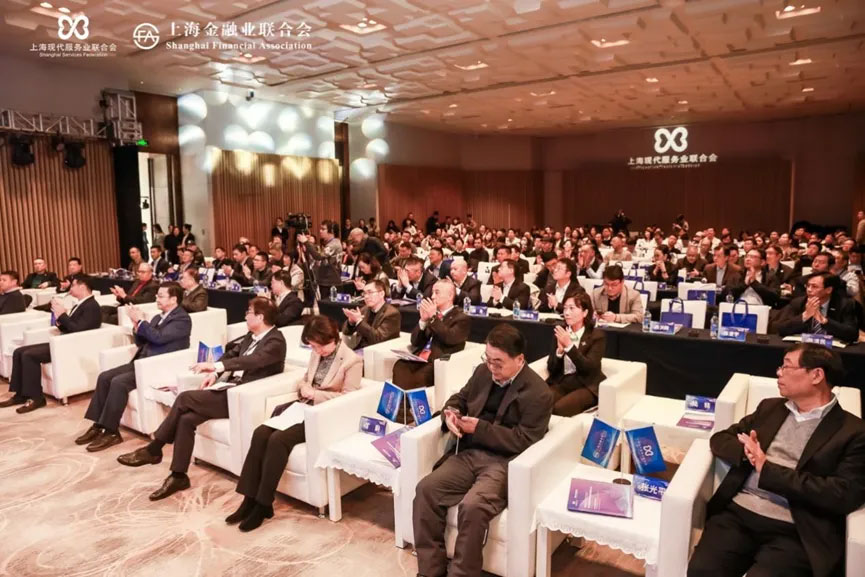
The Conference was graced by a host of distinguished heavyweight guests, including:Sun Jianping, President of Shanghai Modern Service Industry Federation, Xu Zhi, Member of the Standing Committee of the CPC Huangpu District Committee and Deputy District Mayor of Huangpu District, Zhang Guangping, Counselor of the Shanghai Municipal People’s Government and Former First-Class Inspector of the Shanghai Banking and Insurance Regulatory Bureau, Wu Jianxiong, Secretary of the Party Committee and Chairman of Shanghai Data Group Co., Ltd., Qian Bin, Vice President of Bank of Communications. Ding Wei, Member of the Party Committee and Vice President of Shanghai Pudong Development Bank. Li Guande, Vice President and Secretary-General of Shanghai Modern Service Industry Federation, Jian Danian, Vice President of Shanghai Modern Service Industry Federation. Zhu Yong, Director of the Labor Union of China Financial Computerization Corp., Ma Hong, Vice President of Shanghai Modern Service Industry Federation and Director of the FinTech Service Special Committee, Zhao Huan, Director of the FinTech Division, Office for Financial Work of the CPC Shanghai Municipal Committee, Yang Guowei, Director of the Huangpu District Investment Promotion Office

The conference was co-hosted by the Shanghai Modern Service Industry Federation and the Shanghai Financial Industry Association.It was organized by the FinTech Service Special Committee of the Shanghai Modern Service Industry Federation, the Inclusive Finance Special Committee of the Shanghai Financial Industry Association, Shanghai Huangpu Science and Technology Innovation Group Co., Ltd., and Shanghai Data Group FinTech Co., Ltd.It was co-organized by Shanghai Pudong Development Bank, Bank of Communications Shanghai Branch, Shanghai Data Group Co., Ltd., and Huawei Technologies Co., Ltd.The supporting organizations include the Shanghai Huangpu District Investment Promotion Center, the Shanghai Huangpu District Federation of Industry and Commerce, the Shanghai Computer Industry Association, and the Yangtze River Delta FinTech Research Institute of East China Normal University.The special supporting organization is the Beijing FinTech Industry Alliance.In addition, the Shanghai Academy of Modern Service Industry Development, the China-Europe Lujiazui International Finance Research Institute, and the Shanghai Finance and Development Lab provided academic support for the conference.
High-Profile Speeches Offering Visionary and Strategic Insights
To deliver on the “Five Major Financial Initiatives” and effectively serve the real economy, Shanghai is fully implementing the Action Plan for High-Quality Development of Shanghai as a Global FinTech Hub.Released in September 2024, this plan is committed to accelerating the application of digital financial technologies, with a focus on financial regulation and cross-border services. It aims to promote the development of data resources and the agglomeration of industrial factors, so as to enhance the competitiveness of Shanghai as an international financial center.
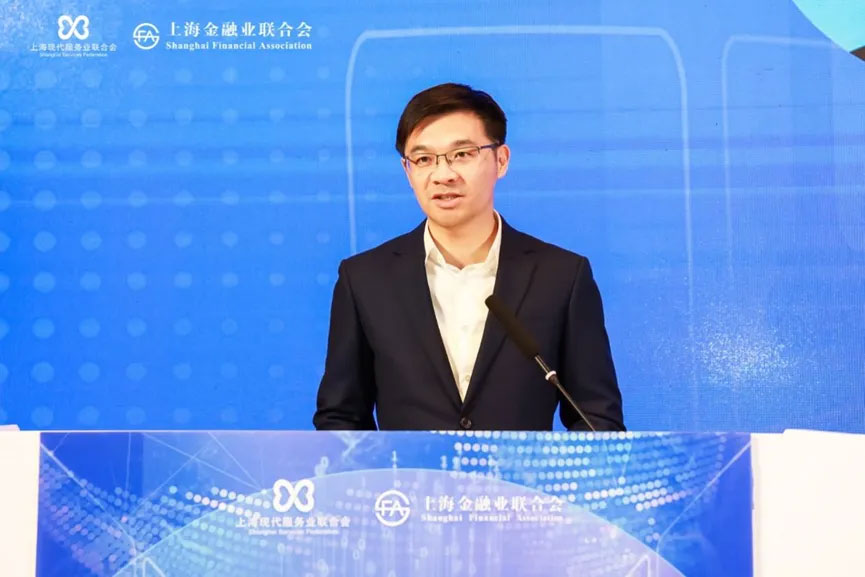
Xu Zhi, Member of the Standing Committee of the CPC Huangpu District Committee and Deputy District Mayor of Shanghai, stated in his address that leveraging the district’s sound financial industrial foundation and environment, Huangpu is developing a series of high-level financial industry clusters, including a financial technology cluster and an equity investment cluster.The district is committed to building a core bearing area of Shanghai’s international financial center with global competitiveness through municipal-district coordination and focusing on key areas. This core bearing area will feature the aggregation of high-quality enterprises, the origin of scientific and technological innovation, and the attraction of top talents.Over the past year, the People’s Government of Huangpu District has signed strategic cooperation agreements with the Shanghai Modern Service Industry Federation (December 28, 2023) and the Shanghai Financial Industry Association (July 2, 2024) respectively. It has also maintained long-term friendly cooperative relations with Shanghai Data Group, China Financial Computerization Corp. and other enterprises. This conference is a vivid reflection of the sincere cooperation among all parties, injecting new vitality into the high-quality development of Huangpu.
In the future, Huangpu will continue its efforts to serve more high-quality market entities, and jointly build a sound industrial ecosystem featuring openness, cooperation and shared benefits.
Xu Zhi pointed out that scientific and technological progress is transforming the world at an unprecedented pace. As the main players in the market, enterprises are more sensitive and responsive to external situations and market changes, and their perceptions of the urban development environment are more concrete and intuitive.He sincerely hoped that through this conference, more sound strategies and effective solutions could be proposed for Huangpu, contributing valuable wisdom and strength to the district’s high-quality development.
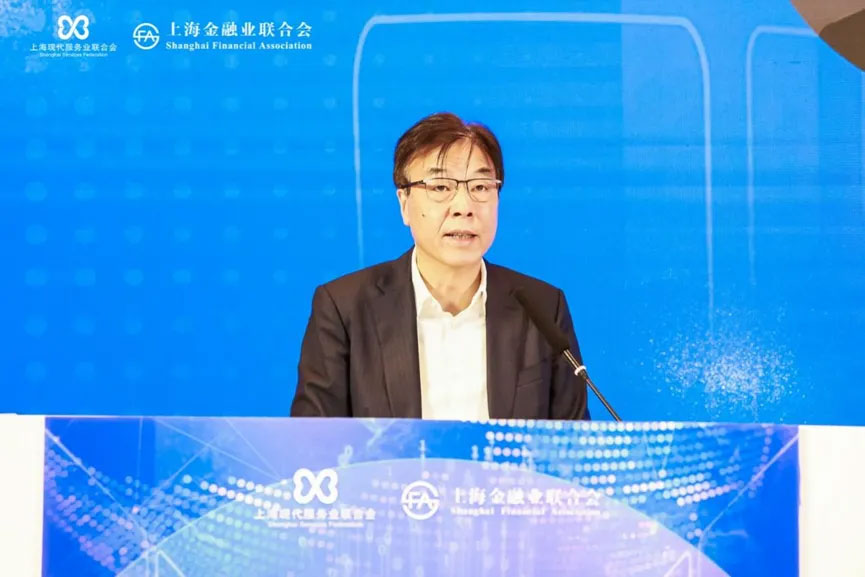
Wu Jianxiong, Chairman of Shanghai Data Group, stated that as a municipal-level, Class-A state-owned enterprise with functional guarantee attributes and market-oriented operation, with data as its core business, Shanghai Data Group has continuously consolidated its role as the supporting entity for the integrated governance of Shanghai’s urban big data resources. It has carried out explorations and practices centered on enabling data to be supplied effectively, circulated smoothly, utilized properly, and secured reliably.The Group is fully committed to building the "2+1+2+1" data infrastructure development and operation system, and constructing and promoting the application of key data infrastructures including the Shanghai Hub of the National Blockchain Network. It is positioning itself as an infrastructure operator for the trusted circulation, development and sharing of data, as well as an authorized operator of public data.By serving the city’s digital transformation, continuously fostering an industrial ecosystem, and supporting the construction of a smooth data circulation system and the development of the data factor industry in Shanghai and across the nation, the Group empowers economic and social progress.
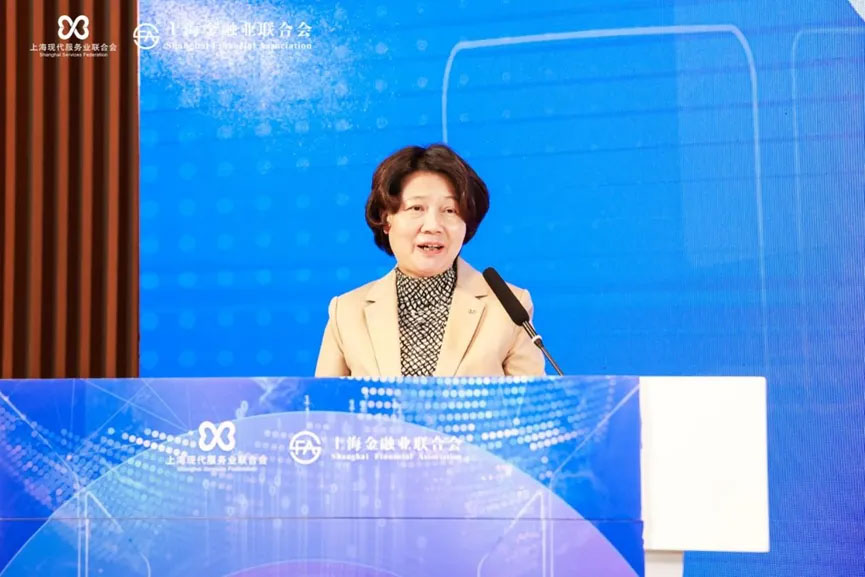
Ding Wei, Member of the Party Committee and Vice President of Shanghai Pudong Development Bank (SPDB), stated in her address that deepening the application of financial technology is not only an inevitable requirement for advancing the major initiative of digital finance, but also a key move to enhance the core competence of financial institutions themselves, as well as an important measure for finance to serve high-quality economic and social development.Thanks to digital empowerment, the inclusiveness of financial services has been continuously enhanced in recent years, and financial support for the real economy has become more targeted and precise, much like precision drip irrigation.In the field of inclusive finance, for instance, SPDB has actively promoted its digital inclusive transformation by building a "4+N+X" digital inclusive product system and a new model of digital risk control and operation. Over the past three years, the bank has served more than 600,000 micro and small enterprise clients and extended a total of more than 1 trillion RMB in loans, continuously improving the coverage and accessibility of financial services.In 2025, standing at a new starting point and facing new tasks, SPDB stands ready to work with all parties to contribute to Shanghai’s development into a global fintech hub and Huangpu District’s construction of a fintech cluster, injecting new impetus into the high-quality development of the real economy.
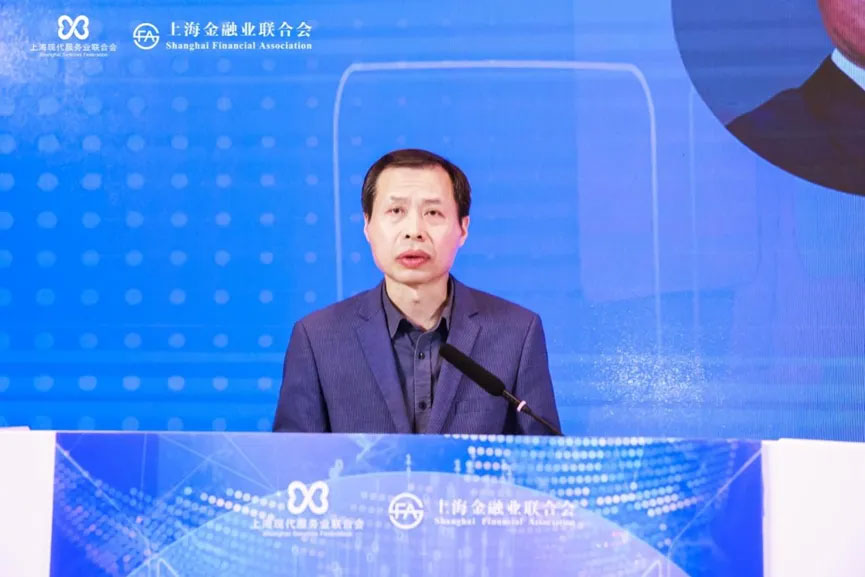
Zhu Yong, Director of the Labor Union of China Financial Computerization Corp., pointed out that China Financial Computerization Corp. will continue to uphold an open and cooperative attitude, work hand in hand with the Shanghai Modern Service Industry Federation and its FinTech Service Special Committee, and jointly explore innovation and development in the financial technology sector.He added that the group will further deepen cooperation, share resources and create value together, to contribute to the development of the financial technology industry in Shanghai and across the country.
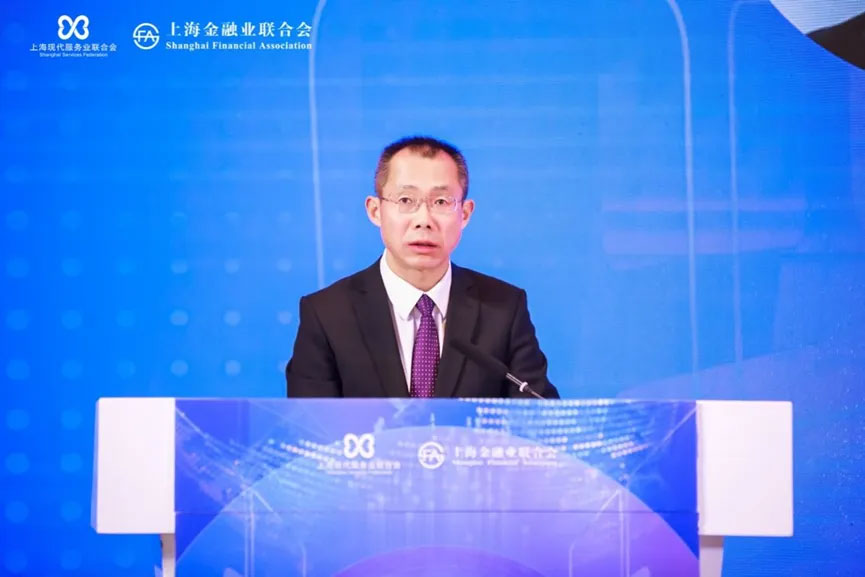
Qian Bin, Vice President of Bank of Communications and representative of the council member unit of the Shanghai Financial Industry Association, stated that with the rapid development of artificial intelligence, technology enterprises shoulder important responsibilities.Together with the Shanghai Modern Service Industry Federation, the bank will promote industry-university-research collaboration, support technology enterprises with strong core competitiveness, and inspire them to empower services through digital transformation.
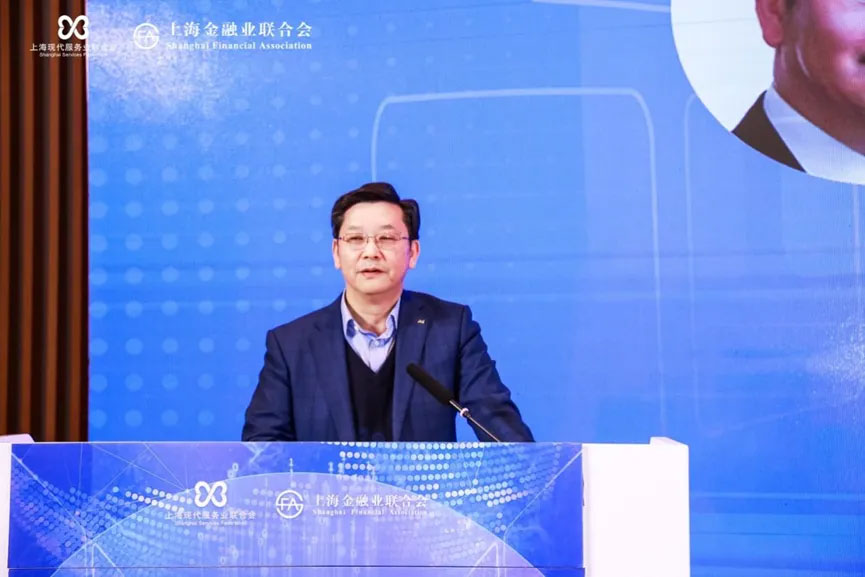
Sun Jianping, President of the Shanghai Modern Service Industry Federation, stated in his address that as China’s largest economic center city and the leading driver of the integrated development of the Yangtze River Delta, Shanghai holds the dual strategic positioning of being an international financial center and a global science and innovation center.To further advance the development of the five key financial sectors—science and technology finance, green finance, inclusive finance, elderly care finance, and digital finance, deliver more effective services to the real economy, and fully implement the Action Plan for High-Quality Development of Shanghai as a Global FinTech Hub officially issued in September 2024, Shanghai is accelerating the deployment of digital financial technologies and scenario-based applications, focusing on key areas including financial regulation and cross-border financial services, stepping up the development and utilization of public data resources, and promoting the agglomeration of data and industrial factors. Against this backdrop, the holding of the “2024 The 5th Financial Technology Application and Services Conference” under the theme “Digital Financial Innovation and Factor Agglomeration” is undoubtedly of great practical significance.
Sun Jianping noted that the Shanghai Modern Service Industry Federation was founded in 2005, marking a history of nearly 20 years. As a comprehensive and hub-type social organization, it now has 1,634 member units, including 211 industry associations, research institutions and chambers of commerce, and serves nearly 100,000 entities.
Centering on the core work of the municipal Party committee and municipal government, the Federation adheres to the tenet of “serving members, serving enterprises, and serving society”, follows the working principle of “building platforms, matching resources, providing services, and boosting development”, and upholds the service philosophy of “proactive service, sincere service, and effective service”. By building extensive connections, embracing various industries and gathering diverse partners, the Federation has vigorously promoted the robust development of Shanghai’s modern service industry.
Engaging Keynote Speeches
The conference featured a policy presentation session and a keynote sharing session, which provided detailed interpretations of Huangpu District’s business environment and supporting policies. Meanwhile, participants delivered insightful judgments and outlooks on the development of the financial technology industry.
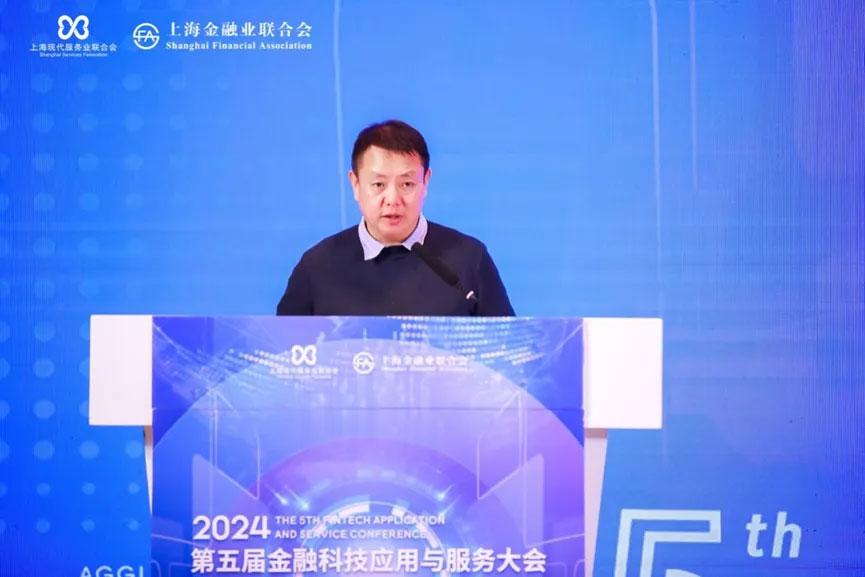
In September 2024, the Shanghai Municipal People’s Government officially issued the Action Plan for High-Quality Development of Shanghai as a Global FinTech Hub. The plan sets the development goal of striving to build Shanghai into a globally leading fintech hub within 3 to 5 years. It also promotes the development of a fintech innovation support system, the creation of demonstration scenarios for fintech innovation, and the optimization of the spatial layout and carrier development for the fintech sector.Zhao Huan, Director of the FinTech Division at the Office for Financial Work of the CPC Shanghai Municipal Committee, delivered an in-depth policy interpretation and a comprehensive sharing on this action plan.
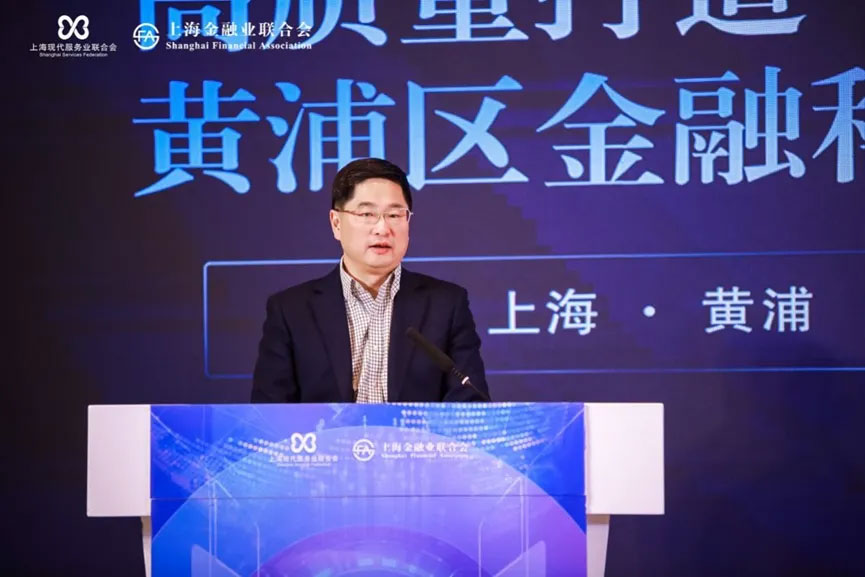
The municipal-level action plan further defines the optimization of Shanghai’s fintech spatial layout, known as the “Two Cities, One Belt, One Port” framework.Huangpu District, for its part, focuses on the development of the “Bund Financial Cluster Belt + Central Science and Innovation Zone”. Leveraging its own industrial advantages, regional strengths and resource endowments, Huangpu took the lead citywide in issuing supportive policies for the fintech industry. It aims to gather core elements of the fintech sector and attract high-level fintech innovation entities.Against this backdrop, Yang Guowei, Director of the Huangpu District Investment Promotion Office, delivered an interpretation and sharing on building a high-quality fintech cluster in Huangpu District.
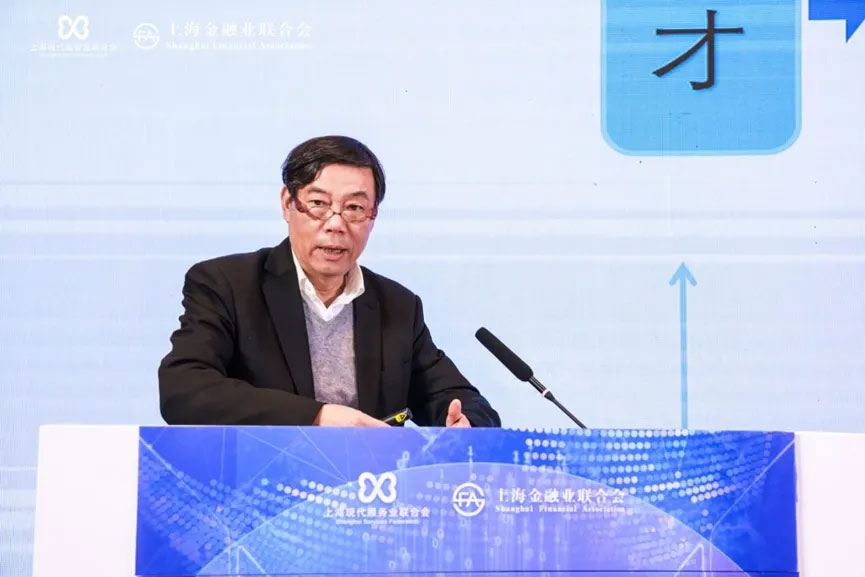
Among the “Five Major Financial Initiatives” — science and technology finance, green finance, inclusive finance, elderly care finance, and digital finance, technology is undoubtedly the core productive force and driving force. Where does technology stand? How do we define the breadth and depth of its impact?In the keynote speech session, Zhang Guangping, Counselor of the Shanghai Municipal People’s Government and Former First-Class Inspector of the Shanghai Banking and Insurance Regulatory Bureau, stated that digital technology serves as the original driving force of the digital economy and digital finance. All kinds of data currently stored rely on computer technology, network technology, communication technology, sensing technology and other related technologies. Without these technologies, the collection and storage of data would be difficult or even impossible.With the continuous innovation and advancement of digital technology, the existing volume of data will undoubtedly keep growing, while new types of data will continue to emerge. No matter how much the types and volume of data increase in the future, they will all be inseparable from technology as their primary source. The value of data also originates from data technology.
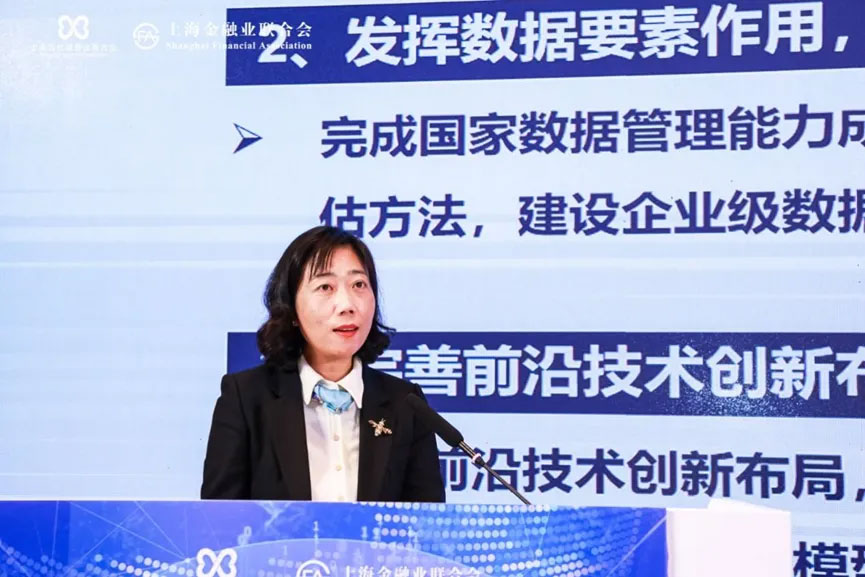
Tong Jieping, Member of the Party Committee of Bank of Communications Shanghai Branch, stated that we are embracing new opportunities brought by a new round of technological revolution and industrial transformation. Therefore, we must seize the new opportunities arising from the development of new technologies and strengthen the core driving force of digital finance.She introduced Bank of Communications' initiatives in digital intelligence. For instance, the bank takes digitalization as the guide to build digital financial service scenarios, promote green financial services, and enhance the quality and efficiency of digital operation and management. In terms of financial risk prevention and control, the bank is transitioning from manual operation to the integration of manual and intelligent approaches. It will leverage the leading role of technology to foster new advantages for the development of digital finance and accelerate the cultivation of new, quality productive forces.Regarding the development of digital finance, she suggested strengthening the integrated development of industry, university and research, building a digital and intelligent financial industrial ecosystem, and paying attention to the risks brought by data sharing and the application of new technologies.
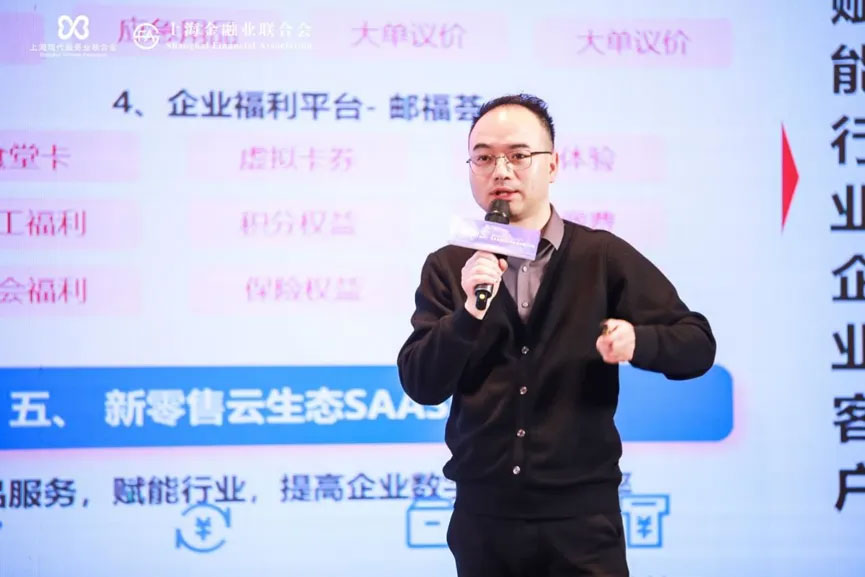
Nan Zhiwen, Vice President of Technology at Ule.com of China Post Group, focused his discussion on the practical scenarios of technology empowering financial development. He introduced the practical application of financial technologies to the group.Frontline customer managers of the Postal Savings Bank of China (including its agency financial services) face enormous marketing pressure. Customer acquisition, especially cold-calling and unsolicited visits, typically consumes more than 70% of their time and energy. Meanwhile, the production systems at the head office of the Postal Savings Bank of China lack sufficient support for frontline business development.To address these challenges, Ule Financial Services independently developed the “Old-to-New Referral Marketing System”. By building an additional layer of referrers around bank customer managers, the system enables referrers to recommend clients to customer managers and automatically receive rewards. This initiative has effectively reduced the heavy marketing workload of customer managers, helped branches overcome customer acquisition difficulties, expanded the marketing radius of bank outlets, and enabled intensive and refined management of customer resources.
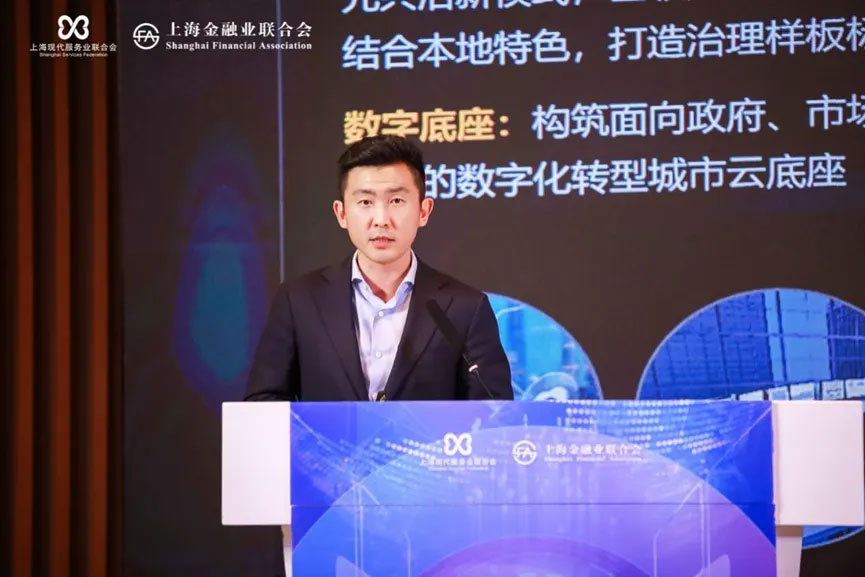
Ban Zhiyu, General Manager of Huawei's Financial Services Business in Shanghai, stated that Huawei has continuously increased its investment in research and development. Over the past decade, its R&D investment has exceeded 1.1 trillion yuan, accounting for one quarter of its annual revenue.Huawei has been rooted in Shanghai for 28 years, and has consistently supported Shanghai in comprehensively advancing the city’s digital transformation. He noted that intelligence represents a new driving force for the development and innovation of financial technology. The progress should follow key steps, namely laying the foundation, aggregating data, unblocking channels, and unlocking intelligence, with independent innovation and digital transformation integrated deeply as a dual-wheel drive.
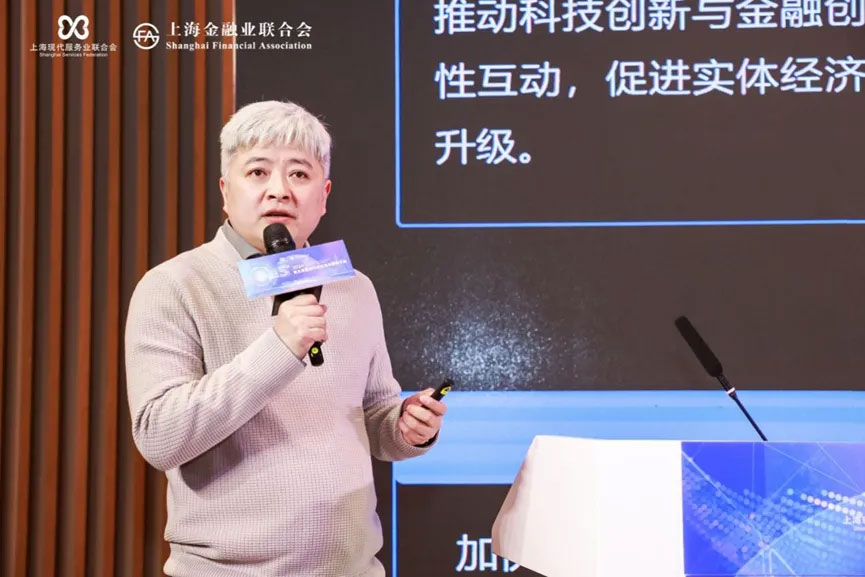
Li Ming, General Manager of the Intelligent Solutions Business Unit at Infinity Group, stated in his keynote speech that it is essential to reshape document digitization and unlock the value of data factors to support financial innovation.
He emphasized that we should not engage in excessive "big model chauvinism" or blindly pursue large models; instead, we should seek solutions in specific scenarios based on profound industry insights.In his view, the core of the AIGC application lies in focusing on the segmented demands of scenarios, integrating practical business problems, and finding the optimal integration of traditional technologies and AIGC technologies.
Signing and Awarding Ceremonies Bring the Event to a Climax
A series of signing and awarding ceremonies were held at the conference, continuously elevating the atmosphere and driving the event to new heights.
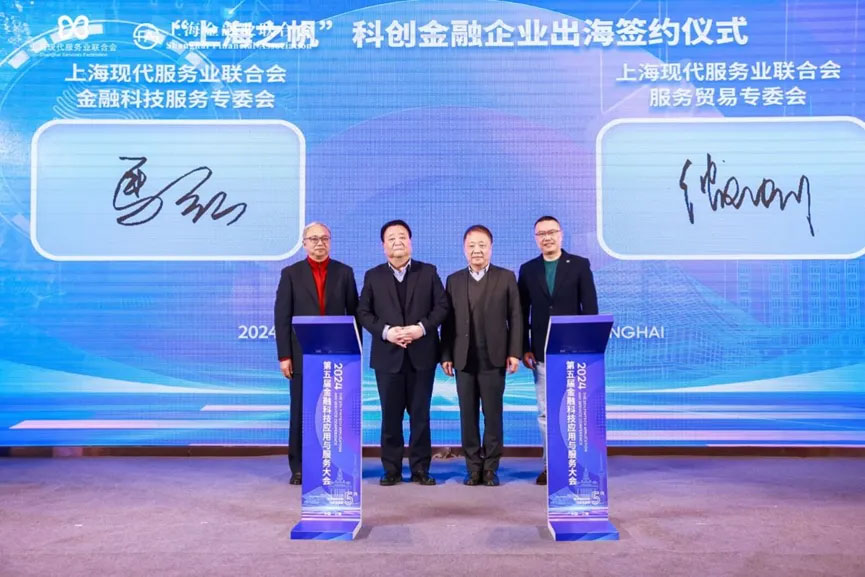
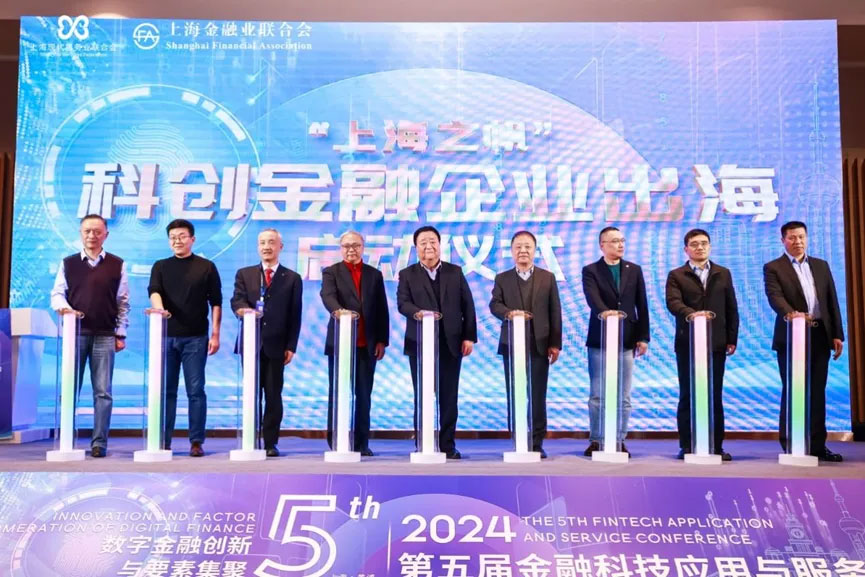
It serves as an important platform for Shanghai’s modern service industry to go global. For this purpose, the conference specially held the launching ceremony of the “Shanghai Sail” Program for Sci-Tech and Financial Enterprises to Go Global.Distinguished guests including Jian Danian, Vice President of the Shanghai Modern Service Industry Federation; Chen Yue, Supervisor of the Federation and Honorary Director of the FinTech Service Special Committee; Ma Hong, Vice President and Director of the FinTech Service Special Committee of the Federation; and Fu Wengang, Vice President and Director of the Trade in Services Special Committee of the Federation, jointly launched the program.
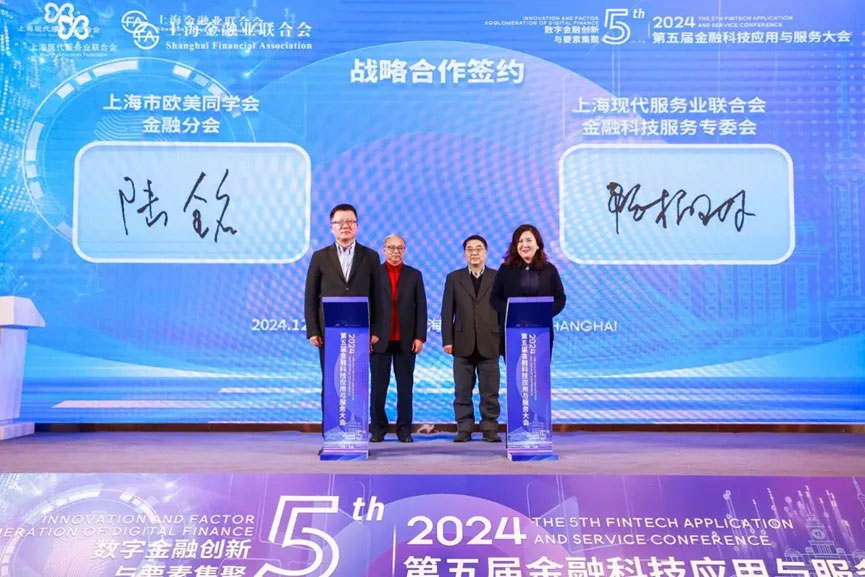
Meanwhile, a strategic cooperation signing ceremony was held between the Finance Chapter of the Shanghai Overseas Returned Scholars Association and the FinTech Service Special Committee of the Shanghai Modern Service Industry Federation.Lu Ming, Rotating President of the Finance Chapter of the Shanghai Overseas Returned Scholars Association, and Zhang Bailin, Executive Director of the FinTech Service Special Committee of the Shanghai Modern Service Industry Federation, attended the signing ceremony.The conclusion of this strategic cooperation marks not only the beginning of resource sharing and complementary advantages between the two organizations but also an important milestone for cross-sector collaboration and innovative development in Shanghai’s financial sector. It represents a new starting point for the two organizations to join hands and jointly promote the innovative development of financial technology services in Shanghai.
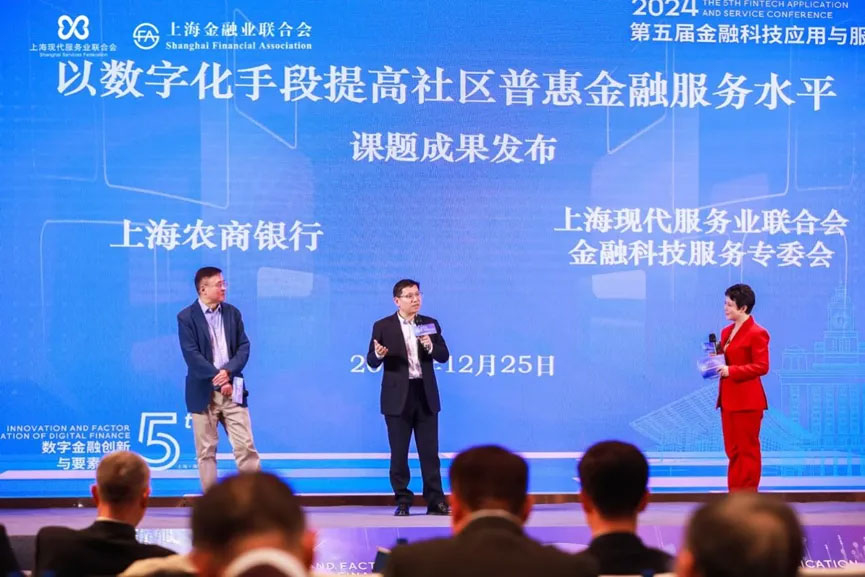
The conference also witnessed the release of two important research achievements, elevating its academic standards.The research findings of the project “Enhancing Community Inclusive Financial Services Through Digital Approaches” were officially unveiled.Chen Yong, General Manager of the Inclusive Finance Department of Shanghai Rural Commercial Bank, and Zhao Ji, Deputy Director of the FinTech Service Special Committee of the Shanghai Modern Service Industry Federation, presented the research process and highlighted the key achievements of the financial research project.
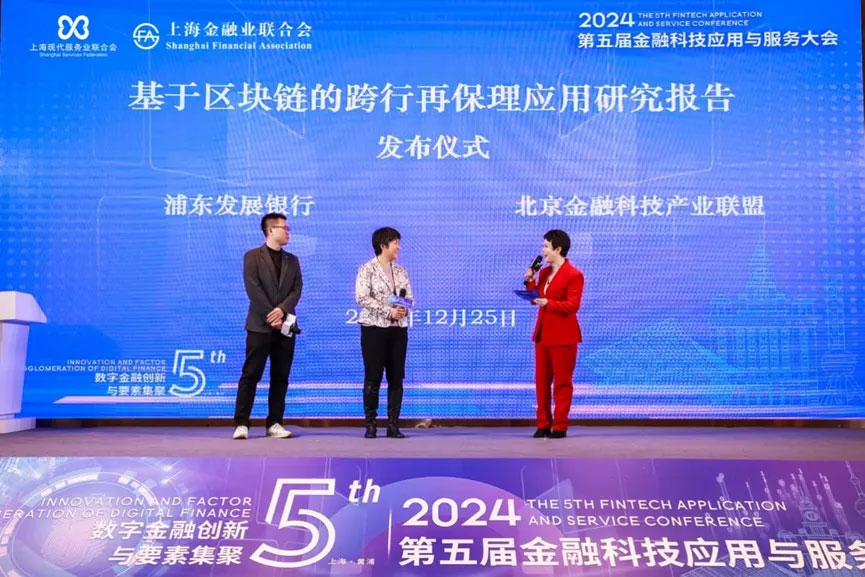
The Research Report on Cross-Bank Re-Factoring Application Based on Blockchain was also grandly released at the conference.In 2024, under the organization of the Blockchain Special Committee of the Beijing FinTech Industry Alliance, a research initiative on cross-bank re-factoring application based on blockchain was jointly carried out, led by Shanghai Pudong Development Bank, with the participation of Bank of Communications, Hangzhou Yunxiang, Agricultural Bank of China and other institutions. The initiative has contributed consortium experience to exploring the empowerment of the real economy through the application of blockchain technology in the financial sector.Nie Liqin, Secretary-General of the Beijing FinTech Industry Alliance, and Feng Huan, Chief Architect of Technology Development and Deputy General Manager of the Technology Development Department at the Head Office of Shanghai Pudong Development Bank, shared the research background of the report and the role of blockchain technology.
The FinTech Conference has been successfully held for four consecutive sessions, and this is its fifth edition. Each session has carried out excellence selection activities to further play the roles of encouraging innovation, leading development, and achieving win-win cooperation through collaboration.Over the past nearly two months, the conference expert panel conducted the selection and research activities of the Golden Wing Award. The award aims to fully showcase the phased achievements of financial technology in boosting the development of the service industry and the real economy, stimulate the sustained construction vitality of the international fintech hub, discover and recognize enterprises and individuals with innovative spirit and outstanding contributions in the fintech field, promote the sound development of the fintech ecosystem, and drive the prosperity and progress of the fintech industry.A total of 15 enterprises, including Shanghai Huangpu Science and Technology Innovation Group Co., Ltd. and Shanghai Infinity Information Technology Co., Ltd., won the New Quality Productive Forces Enterprise Award.Fourteen enterprises, including Shanghai Pudong Development Bank Co., Ltd. and Bank of Shanghai Co., Ltd., received the New Quality Productive Forces Achievement Award.In addition, 9 institutions and enterprises such as the Green Finance Research Center of Fudan University and Xiamen International Bank Co., Ltd. were awarded the EGS Sustainable Development Leadership Award;10 enterprises including China Construction Bank Shanghai Branch and Shanghai Huayi Enterprise Management Consulting Co., Ltd. won the Data Factor Application Award;21 companies including Huawei Technologies Co., Ltd. and Shanghai MoneyWeekly Media Co., Ltd. were honored as Excellent Service Brands;10 enterprises such as Shanghai Data Group FinTech Co., Ltd. and Xuanwu Cloud Technology Holdings Co., Ltd. received the Innovative Enterprise Award;11 individuals including Gu Jianzhong, Deputy Party Secretary and President of Shanghai Rural Commercial Bank Co., Ltd., and Zhou Lefeng, President of Xiangcai Securities Co., Ltd., were presented with the Leader of the Year Award;10 enterprises including Tianhong Fund Management Co., Ltd. and Industrial Bank Co., Ltd. were granted the Leading Enterprise Award.
Insightful Sharing at the Roundtable Sessions
As a product of the integration between the financial industry and technology, fintech is transforming the landscape of financial services at an unprecedented pace. From mobile payments and blockchain to big data analytics and artificial intelligence, the application of these technologies has not only improved the efficiency and accessibility of financial services but also provided new tools and methods for risk management.Against this backdrop, the conference hosted two roundtable sessions, where distinguished guests shared their profound insights and highly practical perspectives.
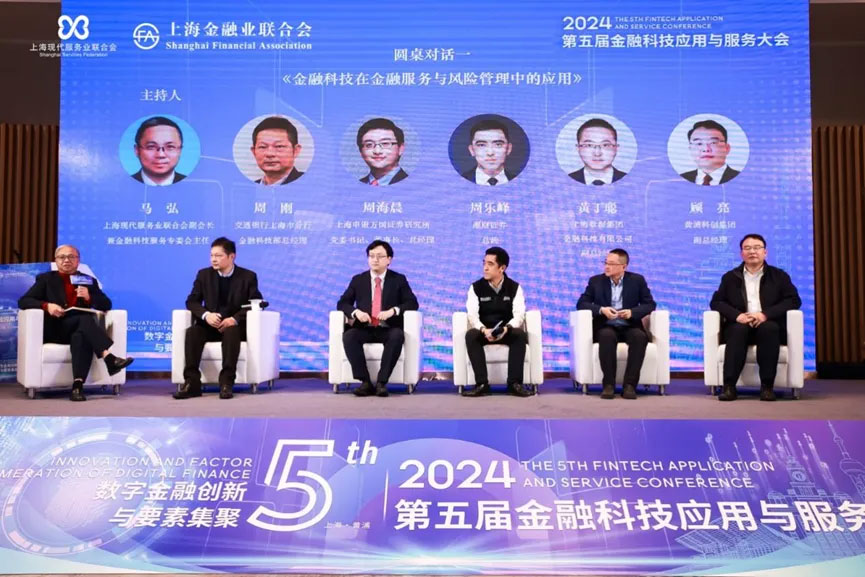
The first roundtable session centered on the topic “The Application of FinTech in Financial Services and Risk Management”, moderated by Ma Hong, Director of the FinTech Service Special Committee of the Shanghai Modern Service Industry Federation.
Zhou Gang, General Manager of the Financial Technology Department of Bank of Communications Shanghai Branch, pointed out that with the advent of the digital era, the application of artificial intelligence has addressed pain points and difficulties encountered in daily operations. Banks possess certain first-mover advantages in digital transformation. Taking inclusive finance as an example, its integration with finTech can enable more effective and direct service delivery.
Zhou Haichen, Secretary of the Party Committee, Chairman and General Manager of Shenyin& Wangu Securities Research Institute, shared his views on the impact of large models on investment research. He stated that the application of finTech in investment research is mainly reflected in efficiency improvement and empowerment, and cannot fully replace human expertise at present.
Zhou Lefeng, President of Xiangcai Securities, noted that the emergence of large models has not fundamentally changed the service models of both buy-side and sell-side institutions. Against the digital backdrop, management approaches have evolved. For the future transformation of securities firms, efforts must be devoted to the application of finTech.
Huang Dingcong, Deputy General Manager of Shanghai Data Group FinTech Co., Ltd., mentioned that services provided to financial institutions mainly include offering incremental data products, supporting financial institutions in connecting with digital scenarios, and conducting exploration in the field of large models. When discussing digital transformation, he emphasized that talent is the most critical factor, while challenges such as scenario adjustment and changes in production factors also need to be addressed.
Gu Liang, Deputy General Manager of Shanghai Huangpu Science and Technology Innovation Group, addressed the development of the finTech industry. He stated that in recent years, Huangpu Science and Technology Innovation Group has joined hands with the Shanghai Modern Service Industry Federation to carry out a wide range of services for finTech enterprises. In terms of ecosystem development, the group has actively built cooperation platforms and established communication channels, empowering industrial agglomeration and enterprise development through services, and assisting financial institutions and tech companies in expanding new sectors and exploring new businesses. Going forward, Huangpu will adopt a more open mindset and stance to promote the growth of the finTech industry.
Inclusive finance has garnered widespread attention across society. Therefore, the second roundtable forum focused on the theme “Building a Multi-Tiered Inclusive Finance Ecosystem”, moderated by Shuai Shi, Executive Deputy Secretary-General of the Shanghai Financial Industry Association.
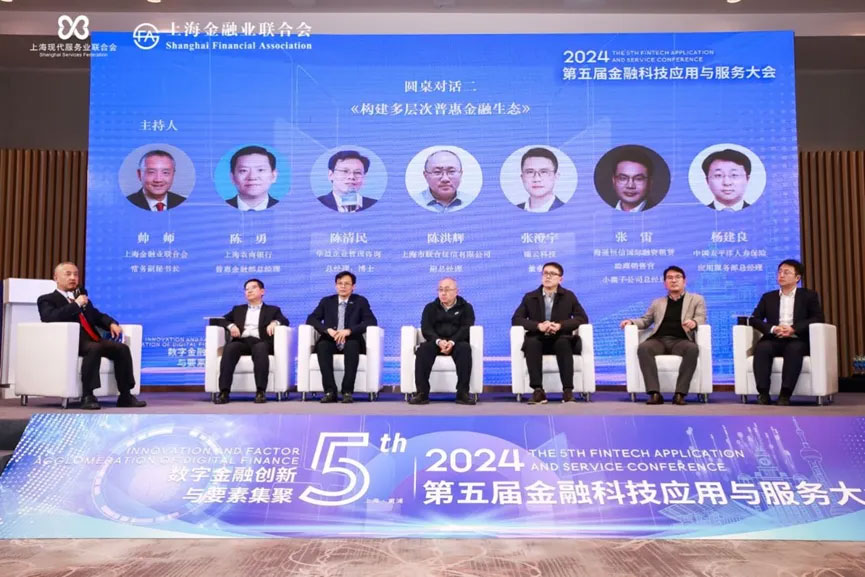
Chen Yong, General Manager of the Inclusive Finance Department of Shanghai Rural Commercial Bank, shared his views on building an inclusive finance service ecosystem. He emphasized that this endeavor should be jointly accomplished by non-bank financial institutions and banks under government guidance, with the support of the whole society. Banks must play a leading role in establishing service frameworks, strengthening channel development, empowering industries through technology, and building comprehensive service systems.
Dr. Chen Qingmin, General Manager of Huayi Enterprise Management Consulting, stated that inclusive finance has achieved leapfrog development in China. In the future, it should continue to focus on customer needs, realize diversified supply, and pursue open collaboration. Meanwhile, efforts should be made to reduce the difficulty of digitalization, helping small and medium-sized banks leverage artificial intelligence to accelerate their transformation.
Chen Honghui, Deputy General Manager of Shanghai United Credit Services Co., Ltd., shared his insights on serving inclusive finance, noting three key changes. Firstly, scenario-based operations have become a trend, enabling more precise services. Secondly, model-driven approaches are increasingly adopted. Thirdly, end-to-end services have expanded access to financial institutions for more small and medium-sized enterprises.
Zhang Chengyu, Chairman of Ziyun Technology, pointed out that for banks, exploring how to use real-time data from manufacturing enterprises to automate customer acquisition is a promising area for future inclusive finance innovation. Additionally, in terms of risk control, a more valuable practice for financial institutions is to conduct precise grading of enterprises based on industry rankings—for example, assessing an enterprise’s position in the industry according to its actual production efficiency.
How can non-bank financial institutions play their roles? Zhang Lei, Assistant Sales Officer of Haitong Hengxin International Financial Leasing Co., Ltd. and General Manager of its Micro and Small Enterprise Subsidiary, stated that Haitong Hengxin serves a large number of micro, small, and medium-sized enterprises. By focusing on equipment and adopting a “lease-instead-of-purchase” model, it has improved the accessibility of financial services. Furthermore, in-depth understanding of enterprises’ business models can serve as a basis for judging SME financing eligibility.
Yang Jianliang, General Manager of the Inclusive Insurance Department of China Pacific Life Insurance Co., Ltd., discussed empowering inclusive finance from an insurance perspective. He emphasized the need to strengthen the development of inclusive finance, leveraging technologies such as operational big data and blockchain, and combining online and offline models to demonstrate the value of insurance.